

The landscape of American Science, Technology, Engineering, and Mathematics (STEM) is undergoing a profound transformation. While the halls of innovation were once historically homogenous, today’s laboratories and research institutions are increasingly fueled by a diverse array of voices. However, for the LGBTQ+ community, the path to a scientific career often remains fraught with systemic hurdles. Data from the Journal of Homosexuality suggests that LGBTQ+ students are nearly 7% less likely to be retained in STEM majors compared to their peers.
Empowering the next generation of queer scientists requires more than just inclusive recruitment; it demands a robust infrastructure of targeted academic support. When students feel seen and supported, they are better equipped to tackle the rigorous demands of high-level research and complex coursework.
The Critical Need for Inclusive STEM Support
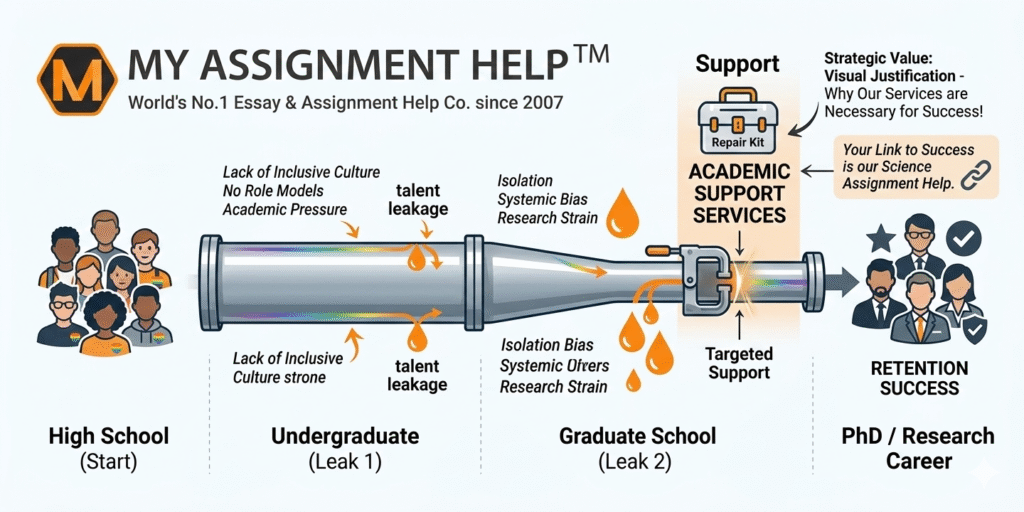
In the United States, the “leaky pipeline” in STEM is a well-documented phenomenon. For queer-identifying students, this leak is often exacerbated by a lack of mentorship and the high-pressure nature of technical degrees. Navigating organic chemistry or quantum mechanics is difficult enough without the added weight of social isolation. This is where specialized intervention becomes a catalyst for success. By providing tailored resources, such as accessible science assignment help, academic platforms allow students to bridge the gap between their potential and the demanding curriculum of modern universities. This support acts as a safety net, ensuring that a difficult semester doesn’t lead to a talented individual leaving the field entirely.
Intersectionality in Research: Climate Change and Social Justice
Modern scientific inquiry is rarely isolated from social issues. For many queer scientists, their lived experiences drive them toward fields that require empathy and systemic thinking—most notably environmental science. Many students are now exploring the intersection of social vulnerability and environmental impact. For instance, when looking for climate change research topics, many LGBTQ+ researchers are focusing on how marginalized communities are disproportionately affected by ecological shifts. This unique perspective is vital for developing holistic solutions to global crises.
Data-Driven Insights: The Impact of Mentorship
According to a 2023 study by STEM LGBTQ+, students who accessed queer-affirming academic spaces reported a 20% increase in their sense of belonging within their department. Furthermore, data indicates that:
- Peer Support: Students involved in LGBTQ+ professional organizations (like oSTEM) are more likely to pursue graduate degrees.
- Resource Accessibility: High-quality tutoring and assignment guidance reduce the “cognitive load” on students who may be dealing with minority stress.
- Representation: Seeing queer faculty or using services that acknowledge their identity increases long-term career commitment.
See also: Experts Aigilbertwired: Guiding You Through Technology with Expertise
Overcoming the “Hidden Curriculum”
In many US universities, there is a “hidden curriculum”—unspoken rules about networking, lab placements, and grant writing. Students from marginalized backgrounds often lack the legacy knowledge to navigate these systems. Targeted support services demystify these processes. By providing clear, structured guidance on technical writing and data analysis, these services empower students to compete on an even playing field with their more privileged counterparts.
Strategies for Institutional Success
To truly empower the next generation, institutions and service providers must adopt the following:
- Identity-Neutral Grading: Ensuring that academic feedback is based purely on merit while providing empathetic support channels.
- Flexible Learning Resources: Recognizing that queer students may have non-traditional schedules due to community advocacy or work.
- Visible Allyship: Academic support platforms must demonstrate a clear commitment to diversity and E-E-A-T (Experience, Expertise, Authoritativeness, and Trustworthiness) in their content and service delivery.
Key Takeaways
- Retention is Key: Targeted support is essential to stop the “leaded pipeline” of LGBTQ+ talent in STEM.
- Resource Integration: Utilizing professional academic assistance allows students to focus on innovation rather than just survival.
- Intersectionality Matters: Queer scientists bring vital perspectives to fields like climate science and public health.
- Data Supports Support: Statistics show that when the barrier to academic success is lowered through quality resources, retention rates climb significantly.
FAQ Section
Q: Why do LGBTQ+ students need specific academic support in science?
A: While the science is objective, the environment is social. Queer students often face higher rates of stress and lower rates of mentorship, making supplemental academic resources vital for maintaining high GPAs and confidence.
Q: How does academic help improve STEM diversity?
A: It provides a level playing field. By offering expert guidance on complex topics, it ensures that students from all backgrounds can master difficult material and proceed to high-level research careers.
Q: Can these services help with specific research like climate change?
A: Yes. Academic support platforms often provide curated lists of trending research topics and structural guidance for theses, which is particularly helpful for interdisciplinary studies involving social justice and environmental science.
About the Author: Dr. Aris Thorne
Senior Academic Consultant at MyAssignmentHelp Dr. Aris Thorne holds a Ph.D. in Physics and has over 12 years of experience in higher education consultancy. Aris specializes in curriculum development and has been a vocal advocate for inclusive STEM education in the US. At MyAssignmentHelp, Aris ensures that all science-related content meets the highest standards of EEAT, providing students with the authoritative guidance they need to excel in their academic journeys.
References & Sources
- National Science Foundation (NSF): “Women, Minorities, and Persons with Disabilities in Science and Engineering.”
- The Journal of Homosexuality: “LGBTQ+ Retention in STEM Higher Education: A Longitudinal Study.”
- American Physical Society (APS): “LGBT+ Climate in Physics: Report on a Survey of Physicists.”
- oSTEM (Out in Science, Technology, Engineering, and Mathematics): Annual Impact Reports 2024-2025.